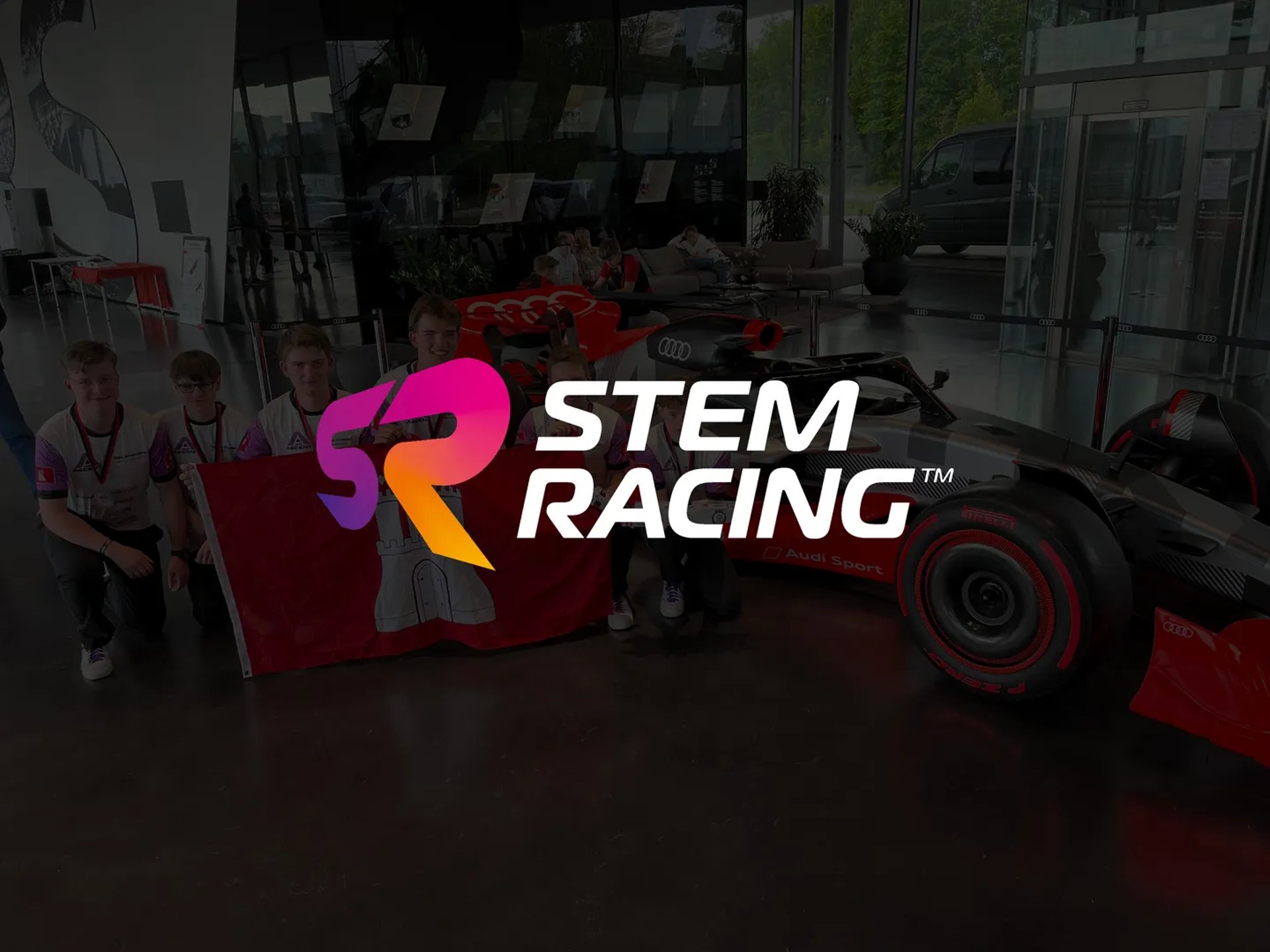
What is F1 in Schools?
F1 in Schools is the world’s largest STEM (Science, Technology, Engineering and Mathematics) competition for students. It challenges young people to design, manufacture, test, and race a miniature Formula 1–style car, powered by compressed CO₂, while managing a professional motorsport team.
The competition is not just about building a fast car. Teams must operate like a real Formula 1 team, combining engineering, aerodynamics, business, marketing, branding, project management, and communication skills. It is an international programme supported by Formula 1 and leading engineering organisations.
The Aim of the Competition
The main aim of F1 in Schools is to prepare students for real-world engineering and business environments.
Participants are challenged to:
Work effectively as a high-performance team
Manage time, budgets, and resources under pressure
Develop innovation, creativity, and critical thinking
Communicate ideas professionally to judges, sponsors, and the public
Ultimately, the competition bridges the gap between education and industry, giving students experience similar to what engineers, designers, and managers face in professional motorsport and engineering careers.
Materials and Manufacturing
Cars are usually manufactured from high-density foam blocks supplied by the competition. Precision is essential:
Weight reduction without compromising strength
Accurate axle alignment to reduce friction
Smooth surface finishes to improve airflow
The process proves that engineering is about precision, testing, and iteration, not just ideas.
Testing and Performance Analysis
Before racing, teams must rigorously test and refine their cars.
This includes:
Measuring mass and centre of gravity
Analysing wheel friction and straight-line stability
Improving alignment and surface quality
Data collected during testing is used to justify design decisions to judges. This demonstrates engineering reasoning, not guesswork.
Racing and Competition
On the race, cars are launched along a 20-metre track using a CO₂ cartridge. Two cars race side-by-side, reaching high speeds in under one second.
However, winning races alone is not enough to win the competition.
Final results are based on:
Car speed
Engineering portfolio
Enterprise and business planning
Verbal presentation to judges
Team professionalism and branding
Pit display quality
This ensures the competition rewards balanced teams, not just fast cars.
Marketing
F1 in Schools supports the business side of motorsport.
Teams must:
Develop a professional brand identity
Create sponsor proposals and marketing strategies
Demonstrate how the team would be commercially viable
Communicate clearly with judges and external partners
Communication and Presentations
Teams must deliver formal presentations to a panel of judges, explaining:
Design and engineering decisions
Testing and development processes
Budget management and enterprise strategy
Team structure and collaboration
Strong communication is essential. Judges assess:
Confidence and clarity
Technical understanding
Ability to answer challenging questions
This prepares students for professional interviews, pitches, and engineering presentations.

Contact Us
Reach out to drive rt for questions or collaboration.
Contact
Reach out to our F1 in schools team anytime.
Phone
drive.rt@outlook.com
+34 611 199 601
© 2026. All rights reserved.